Nobody Warned Me It Would Start Happening Around 45. A Dermatologist Finally Explained Why – and Why Everything I’d Been Doing Was Making It Worse.

Why does facial hair show up around 45–50?
When estrogen drops in perimenopause, testosterone becomes proportionally stronger. In women with certain follicle sensitivities, this activates hair growth in new areas – chin, upper lip, jawline. It's a predictable biological process that happens to a significant portion of women, not a character flaw.
Does tweezing make hormonal chin hair worse?
Yes. Tweezing creates a micro-trauma response in the follicle. The follicle heals and often returns slightly coarser and more active. Over years of tweezing, you are reinforcing the very follicles you are trying to stop.
Why didn't my at-home IPL device work?
Most at-home IPL devices lack active cooling. Without cooling, the skin surface absorbs heat at around 150°F before the light reaches the follicle. The user turns the device to a lower setting to avoid burning – and at lower settings, the light doesn't reach deep enough to disable the follicle. It's a physics ceiling, not a user error.
What makes cooled IPL different?
A Peltier cooling chip holds the skin surface at approximately 50°F before each flash. This means the device can run at full power without burning. At full power, the light reaches the follicle base. That single difference is why cooled devices work where others don't.
I check my chin in the rearview mirror before I walk into any place that matters, whether it's a dinner out or my granddaughter's school concert. I've been doing it for six years.
I started around 48 and told myself it was just hormones, part of getting older. I told myself that so many times it stopped feeling like an explanation. It became a verdict.
Nobody warned me, not my doctor, not my mother, not even one magazine article.
The Part Nobody Tells You About
When estrogen drops in perimenopause, testosterone becomes proportionally stronger.
In women with certain follicle sensitivities, that activates hair growth in new places – chin, upper lip, the shadow below the jaw.
It's a predictable biological process, not a character flaw.
You are not the only one. You were never the only one.
Here is the part I did not know: tweezing makes it worse.
When you tweeze a hair, you pull the follicle.
You create a small trauma response. The follicle heals – and often comes back slightly coarser, slightly darker, slightly more determined.
Over years of tweezing, you are training those follicles to do the opposite of what you want.
For six years, I had been tweezing and making it worse.
Professional laser was $180 a session, with a minimum of six sessions, which was out of reach on a retirement income.
I'd read the reviews of at-home IPL, but it seemed to work only on certain skin and hair types, and I didn't know if I qualified.
So I kept tweezing a few times a week, with tweezers in every bag I owned.
I didn't think of it as unusual. I thought of it as being prepared.
I spent thirty years as a school counselor. I was supposed to have my mornings back.
Instead I had given some of them to this – without ever deciding to.
The Dermatologist Appointment That Changed Everything
My daughter made the appointment. She noticed what I was doing in the car one morning and asked me, gently, why I did that every time. I told her it was nothing. She made the appointment anyway.

The dermatologist, Dr. Xi Zhao, did not treat me like a problem to be managed.
She showed me exactly what happens to a follicle during perimenopause – and what happens when you tweeze it repeatedly over years.
She said two things that stayed with me.
First: your follicles are not broken. They are responding to a hormonal shift, and your tweezing has been reinforcing their activity.
Second: the reason at-home devices haven't helped women in your situation isn't your skin or your hair color. It's that devices without cooling have to run at lower power – and at lower power, the light never reaches the follicle base.
She showed me the NeddLume X3, pressed it against her forearm, and said, "Feel that."
It was cold, like a cold spoon against my skin.
She said, "That's how it operates at full power: no burn and no turning it down." The cooling is what removes the ceiling.
– And What Changes With Cooling
Dr. Zhao explained five engineering problems – and exactly how this device solves each one.


What Made This One Different
That evening I looked up the technology.
I found the Fitzpatrick compatibility chart and saw that I was in range. My dark brown hair was also within the type IPL is designed to target.
I ordered it at 9pm on a Thursday.
Important: This device does not work on grey, white, or very light hair.
IPL works by targeting the melanin pigment inside the hair shaft. Fully grey or white hair contains no pigment – the light passes through without effect.
If your facial hair is still dark brown or black, you are in the right place. If it has already turned fully grey or white, this device is not the right solution.


The device arrived Saturday, and I did my first session that evening: four minutes for the chin, upper lip, and below the jaw.
I tensed while waiting for the burn, but each flash felt like a cold coin pressed to my skin, with no redness or heat.
Nothing looked different – which, it turned out, was exactly right.
By week three, regrowth was slower, and the hair was coming back finer.
By week five, I went three days without tweezing and didn't notice.
Week eight: I drove to my daughter's house for Sunday dinner and walked from the car to the front door without checking my chin. I didn't realize I hadn't done it until I was already inside.
What Getting Ready Looks Like Now
I get up, wash my face, and put on my moisturizer.
I don't look for hairs.
For six years that check was just part of the morning – never written down, always done. That step is gone.

If you are somewhere around 45 and you have started noticing things that weren't there before, and you've told yourself it's just hormones –
I told myself that for six years.
It was not my skin. It was not my age. It was a physics ceiling built into every device without cooling. That ceiling has been removed.
Why I Chose This One Over the Devices I'd Already Tried
I looked at every major device before I ordered. Here's the honest version – which device was designed for which buyer.
Specs from brand sites · Prices as of June 2026

🎁 Limited Signup Offer
Get 10% Off – Just Enter Your Email
Takes five seconds. Applied to your cart instantly.
This offer is part of a limited launch period and is not guaranteed to be available next time you visit.

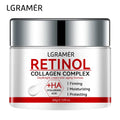
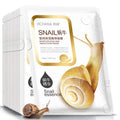
The device works under the skin. After each session, the skin above needs two things: stop the redness, put moisture back in.
The cream handles the first, and the mask handles the second.
I use the cream right after the session, then spend fifteen minutes with the mask on the areas that need it most.
I wouldn't have bought either of these on my own. Most people don't think to. That's why they include them with every order.
What NeddLumers Are Saying


